Apartment Buildings
Submeter & Solar Billing for Apartment Buildings
Apartment buildings are one of the hardest property types to bill correctly — multiple tenant meters, common-area load, constant turnover, and utility tariffs that get complicated fast, including CARE, FERA, and Medical Baseline discounts. Energy311 bills every tenant at the correct utility rate and connects to the property management system you already use, so invoices, move-ins, and move-outs all live in one place. If the property also has on-site solar, Energy311 handles that on the same platform — no solar required to get started.
Best fit for owners and developers of apartment buildings and multifamily communities who submeter electricity, gas, or water to tenants, with or without on-site solar.
Talk to Energy311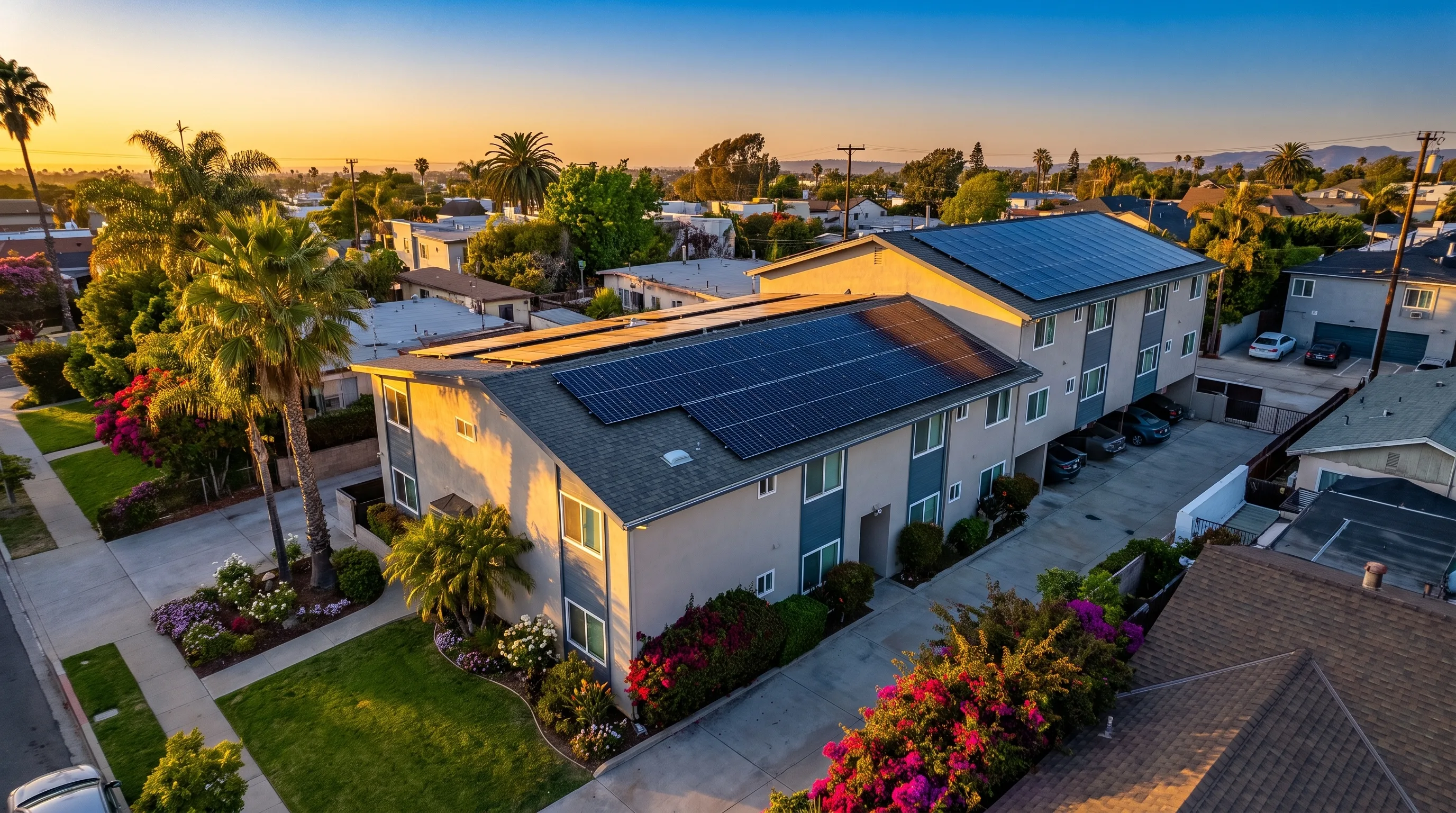
Submetering built for how apartment buildings actually run
Property owners use Energy311 to bill tenants for submetered electricity, gas, and water — no on-site solar required. Utility tariffs for apartment tenants get complicated on their own: CARE, FERA, and Medical Baseline discounts have to be applied to the tenants who qualify, tiered and time-of-use rates change throughout the year, and rules for what a landlord can bill a tenant vary by state and property type. Energy311’s rate engine handles all of it, so every tenant gets billed correctly whether or not the property has solar.
Billing against the current utility rate matters because energy prices are unpredictable and have tended to rise faster than a fixed rate or lease escalator can anticipate. A fixed price that looks fair today can leave a property owner absorbing the difference for years if rates climb past it, while tenants see no benefit if rates rise more slowly. Tying every bill to the actual market rate keeps pricing accurate as rates move, in either direction.
What Energy311 handles for apartment buildings
Meter
Reads tenant and common-area submeters at 15-minute intervals — electricity, gas, and water — and the site’s solar generation meter too, if it has one.
Bill at the correct rate
Every tenant is billed against the current utility rate schedule, including CARE/FERA and medical baseline discounts where they apply. If the property has solar, credits are applied under whichever model it uses — VNEM, NEM 2.0, or NEM 3.0 / net billing.
Gas and water too
Submetered gas and water can be billed on the same platform and the same invoice as electricity, instead of a separate vendor for each utility.
Collect
Tenants pay online, and bills post directly into the property management system you already use, so turnover and adjustments carry through automatically.
One place for invoices, move-ins, and move-outs
Apartment residents move in and out far more often than a commercial tenant does, and every move-in, move-out, and mid-lease adjustment has to show up in the next bill correctly. Energy311 connects to the property management system you already use, so invoices, move-ins, move-outs, and adjustments all live in one place instead of a separate portal or spreadsheet. Property managers send us those changes directly, and the system applies them without a portal to log into or a support ticket to file.
Already have solar? We bill that correctly too
A single rooftop array on an apartment building has to be split across many tenant meters, and the crediting mechanics depend on how the property is interconnected. With Virtual Net Energy Metering (VNEM), solar exports from one centralized array are allocated to individual tenant and common-area meters, crediting bypassable charges at the full retail time-of-use rate. Properties still running under NEM 2.0 keep that full-retail crediting; newer interconnections fall under NEM 3.0 / net billing, where exports are instead credited at a lower, predetermined avoided-cost rate. Energy311’s rate engine handles the calculation either way, so a property doesn’t need to guess which regime applies to which meter.
Non-bypassable charges — public purpose programs, wildfire and bond charges — are billed to tenants and never offset by solar credits, and where a tenant’s solar credits exceed their bill in a given month, the excess rolls forward to the next bill and reconciles at an annual true-up, the way the utility itself administers NEM.
For affordable-housing properties, Energy311 also supports billing structures like California’s SOMAH program, which puts solar on income-qualified multifamily housing and splits the resulting generation between tenants and common areas.
How to route solar energy to tenants in a multi-tenant buildingIs it legal to charge tenants for solar power?